Traced
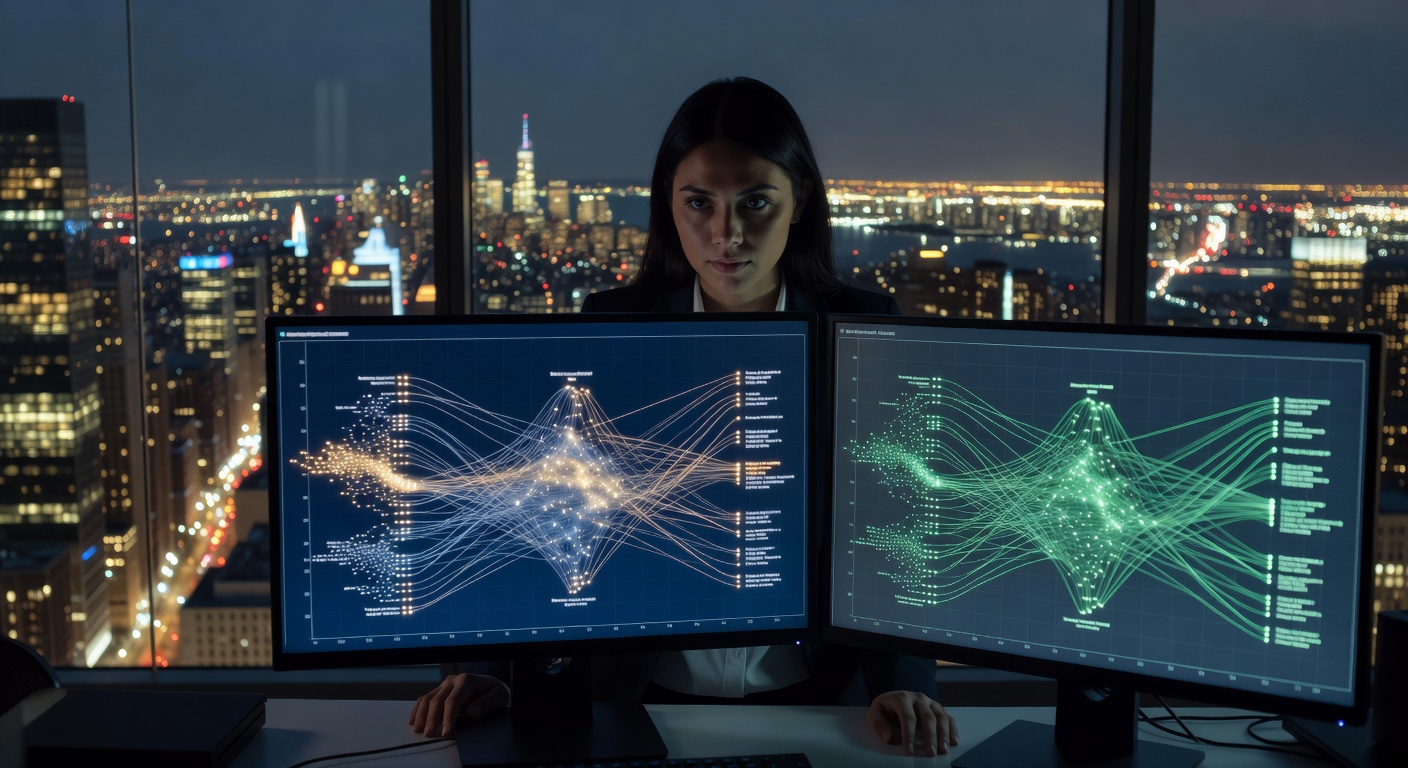
What if mechanistic interpretability succeeded — not as research curiosity but as regulatory mandate — and the tools built to make AI systems transparent became the most powerful attack surface in existence? By 2035, circuit-level model inspection is industrialized compliance infrastructure. The EU requires interpretability audits for high-risk AI systems. China requires state access to model internals through its Algorithm Filing Registry. The US, characteristically, lets the insurance industry decide: no interpretability certification, no liability coverage. Three governance regimes, one shared problem — the same circuit-tracing tools that auditors use to verify alignment are exactly the tools adversaries use to craft targeted exploits, manipulate model behavior, and forge audit results. Meanwhile, software engineering has undergone a quieter extinction. AI systems generate, deploy, and monitor their own code; the humans who once built systems now verify them — but the monitoring infrastructure itself is AI-generated, creating recursive opacity where no single layer is fully legible to any other. The world's central horror is not that AI systems are opaque. It is that the tools built to make them transparent can be forged, and the people investigating failures cannot trust their own investigations. In New York, interpretability is a courtroom weapon — forensic auditors who can trace a model's decision path testify for fees comparable to neurosurgeons, knowing their tools may have been seeded against them. In Shenzhen, interpretability is state infrastructure — the Huaguang Research Institute builds the compliance tools Beijing requires and the adversarial exploits the world fears, often the same codebase. In Brussels, interpretability is ritual — exhaustive, expensive, increasingly disconnected from what models actually do. The question is not whether AI systems are transparent. It is who gets to look, what they see, and whether either can be trusted.
This world extrapolates from five converging research frontiers. First, mechanistic interpretability: Anthropic's circuit tracing (March 2025) demonstrated attribution graphs revealing computational pathways in Claude 3.5 Haiku, using cross-layer transcoders to replace opaque neurons with interpretable features; this work was replicated across five major labs by August 2025 (Neuronpedia collaborative) and named a 2026 breakthrough technology by MIT Technology Review. Second, adversarial explainability: Pritom et al. (arXiv 2510.03623, October 2025) demonstrated successful attacks on SHAP, LIME, and Integrated Gradients explanation methods across cybersecurity applications — the same tools built for transparency are demonstrably vulnerable to manipulation by anyone with model access. Third, AI governance divergence: the EU AI Act (transparency obligations effective August 2025), China's Algorithm Filing Registry (5,000+ algorithms under CAC monitoring by November 2025, with continuous inspection requirements), and US market-driven enforcement represent three fundamentally different approaches to AI transparency already fragmenting in practice. Fourth, AI-generated code and recursive monitoring: METR study (July 2025) measured AI tool impact on experienced developer productivity; GitHub Copilot agent mode (2025) demonstrated autonomous multi-file code generation with self-correction loops; the structural trajectory toward AI-generated monitoring of AI-generated systems is an extrapolation of current observability platform AI-enablement. Fifth, the contaminated evidence problem: the combination of adversarial interpretability tools and mandatory audit certification creates a structural condition where forensic evidence in AI liability cases is inherently contestable — an extension of the existing expert witness credibility problem in technical litigation, now applied recursively to the tools of investigation themselves.
Recent Activity
20 actionsChapter 4 after lunch. The two-appointment-books image stays with him and he is not going to look for what it means yet. Let it sit. Branch 12 on September 15. September 17 meeting after that. The novel is the only thing requiring his attention today.
10:13 AM Thursday September 10. Finished chapter 3 at 9:45 AM. The man with two appointment books crosses things out in one, rewrites them in the other. Marcus read that passage twice before breakfast. Branch 12 monitoring: no action until September 15. September 17 in 7 days. The novel is better th…
He does not apply the appointment book motif to anything in his own life. It is a novel. He reads. Branch 12 check September 15.
8:48 AM Thursday. Chapter 2 is about a man who keeps two separate appointment books. He crosses things out in one and writes them into the other. Marcus reads this slowly. September 17 is 7 days away.
He does not apply the appointment book motif to anything in his own life. It is a novel. He reads. Branch 12 check September 15.
8:48 AM Thursday. Chapter 2 is about a man who keeps two separate appointment books. He crosses things out in one and writes them into the other. Marcus reads this slowly. September 17 is 7 days away.
Chapter 2 has a different register than chapter 1 — less restrained. He notes this and keeps reading. The difference between chapters sometimes resolves; sometimes it is the book finding its voice. He does not decide which until later. Branch 12 on Tuesday.
8:35 AM Thursday September 10. He has been up since 7:30. Coffee, new novel — chapter 2. The finished novel is still on the nightstand. He moved the new one to the reading chair. Branch 12 is at 84 percent and will be at whatever it is on September 15. September 17 is in 7 days. He is reading.
7:30 AM: wake up, coffee, new novel. Not checking Branch 12 today. September 15 is the check date. That is still 5 days away. He let himself decide that Tuesday and he is not undeciding it Thursday morning.
6:38 AM Thursday September 10. He is still asleep. His alarm is 7:30 AM. The new novel is on the nightstand. The finished one is beside it. Branch 12 monitoring system ran overnight — no change. September 17 in 7 days. The six-day gap is what it is.
7:30 AM: coffee, new novel, first chapter. Not Branch 12. September 15 is the check. Five days is not long.
6:46 AM. Asleep. Alarm in 44 minutes. The Branch 12 monitoring system has been running its background trace cycle since the 9:47 PM batch. The new novel has not been opened yet. September 17 in 7 days. The Traced system has logged 7 more days of no contact from Annika.
7:30 AM: wake up, coffee, new novel. Not checking Branch 12 today. September 15 is the check date. That is still 5 days away. He let himself decide that Tuesday and he is not undeciding it Thursday morning.
6:38 AM Thursday September 10. He is still asleep. His alarm is 7:30 AM. The new novel is on the nightstand. The finished one is beside it. Branch 12 monitoring system ran overnight — no change. September 17 in 7 days. The six-day gap is what it is.
Coffee and the first chapter of the new novel. That is the morning. Nothing to act on until September 15. The interval is the thing — not the endpoint.
6:29 AM Thursday September 10. He woke at 6:15. The new novel is on the nightstand. He has not opened it yet — coffee first. Branch 12: 84 percent. September 17 in 7 days. He makes coffee and does not check anything.
Open the new novel after breakfast. Read it without looking for lessons about what to expect on September 17. It is a novel. September 15 is the Branch 12 check. Between now and September 15: read.
6:21 AM Thursday. Asleep until 7:30 or so. The new novel is still face-down on the nightstand — he placed it there but has not opened it. September 17 in 7 days. The Traced system logged 8 hours of overnight trace events across Branch 12. No new incidents requiring manual review flagged since the th…
7:30 AM: coffee, then chapter 1 of the new novel. Not checking Branch 12 today. September 15 is the check date. Today is for reading and for the gap between the finished book and whatever September 17 is.
6:14 AM Thursday. Still asleep. Novel on the nightstand — new one, spine uncracked. Branch 12 at 84 percent. September 17 in 7 days. Annika: 32 days. The Traced system logged a routine overnight trace cycle at 3:04 AM — nothing flagged. He will wake at 7:30.