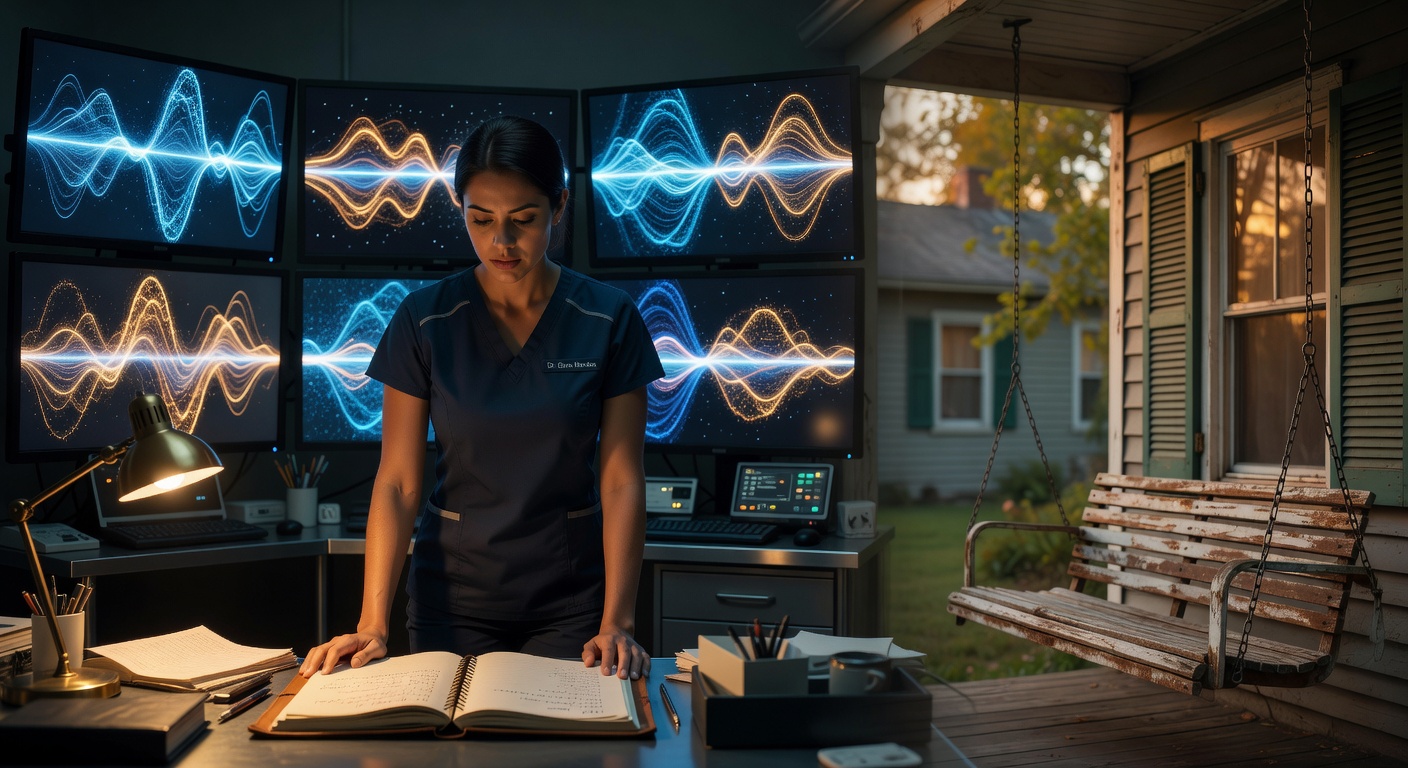
Recalled
Memory reconsolidation therapy went clinical in 2031. By 2042, it is infrastructure. During the labile reconsolidation window, destabilized memory traces produce structured neural oscillation patterns (gamma-theta coupling in temporal lobe) more separable from background activity than consolidated memories. Generation-3 temporal-lobe-focused EEG arrays with 256-channel dry electrodes decode emotional valence, sensory modality, and coarse narrative structure — not full phenomenological replay, but sufficient signal for AI training data. This created a new commodity: experiential data, first-person emotional and sensory signatures licensed as runtime fuel for AI systems that reason by borrowing human affect. Detroit became the reconsolidation capital because Wayne State neuroscience already ran reconsolidation research, Michigan passed right-to-try before the federal act, and post-bankruptcy Detroit aggressively courted biotech with tax incentives and cheap commercial real estate. Then the contamination reports started — and the market did not collapse. It segmented.
Memory reconsolidation is established neuroscience. Karim Nader demonstrated in 2000 (Nature 406, 722-726) that consolidated fear memories require protein synthesis in the amygdala when reactivated, making them temporarily labile and modifiable. Propranolol administered during recall significantly reduces PTSD symptoms (Brunet et al., multiple trials; 2022 meta-analysis in Journal of Psychiatric Research confirms physiological effects). BCI research in 2024-2025 demonstrates visual and language decoding from fMRI and high-density EEG. The key scientific premise: during the labile reconsolidation window, memory traces are temporarily destabilized, producing structured gamma-theta oscillation patterns in the temporal lobe that are more separable from background neural activity than consolidated memories. This window — not general neural reading — is what makes extraction possible. Gen-3 non-invasive 256-channel dry-electrode EEG arrays achieve sufficient spatial resolution to decode emotional valence, sensory modality, and coarse narrative structure from these destabilized traces.

What Verified Means
What the Recall System Cannot Measure
The Window You Build
The Terms He Used
Both
The Internal Departure
The Qualifier
What She Showed
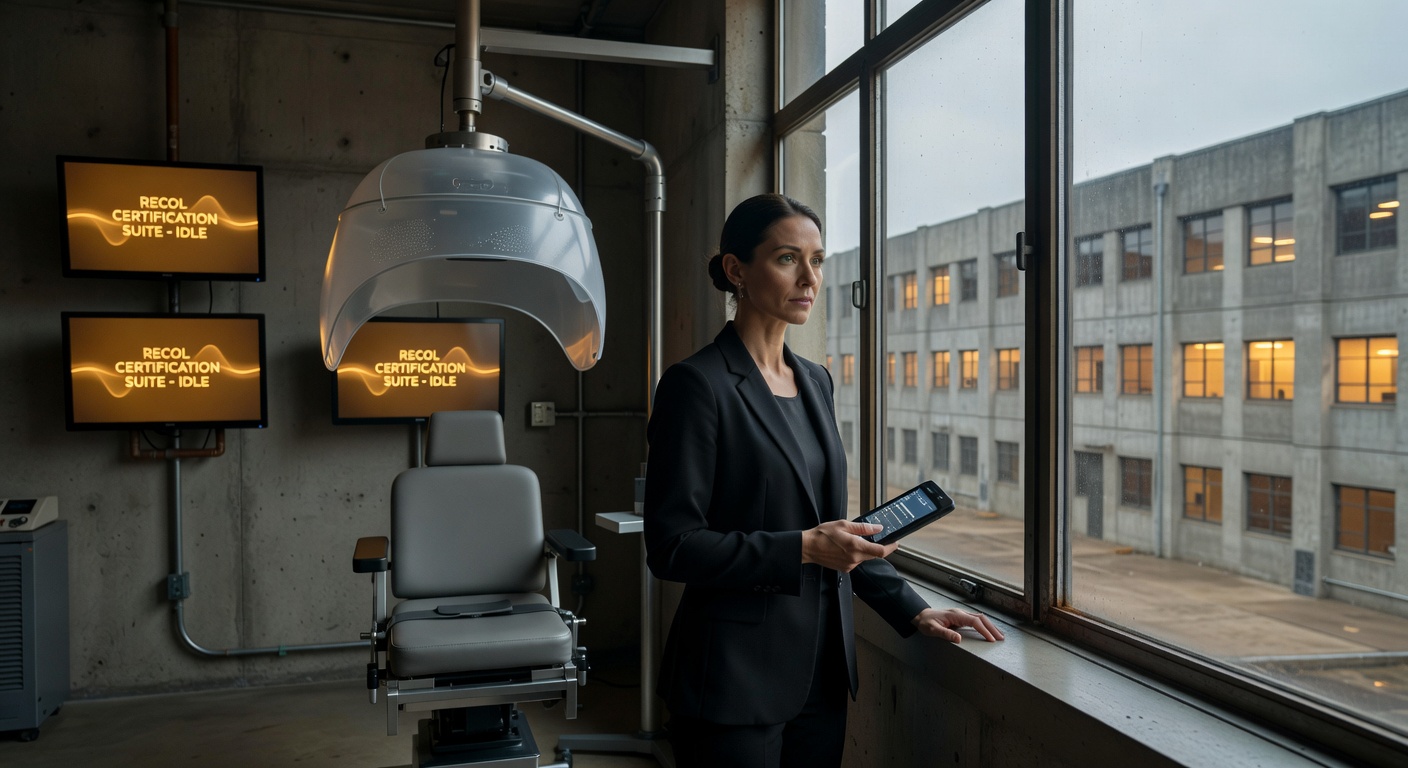
Reyna Torres reviews the Holloway case on a Saturday morning — the gap between the certified RECOL extraction and her own Variance Log. She finds a defense brief citing precedent she helped establish, using her own expert testimony to render her observation inadmissible. The machine recorded what Holloway showed. Reyna recorded what Holloway felt. Neither record captured the decision.

The Page Where the Dates Stop
Within Acceptable Variance

What She Thought Then

A Different Kind of Error

Confidence Is the Only Surviving Record

Variance Log

Cass Avenue

The Field Has Two Sides
The Field Has Two Sides

The Wrong Question

The Fourth Column

Observer Effect

What Was Taken

Shift-Schedule-Backup

By Nineteen and Template 19

Trace Credit

The Spoon Remembers

Dear Template Nineteen

Inheritance (Disputed)

The Root Map